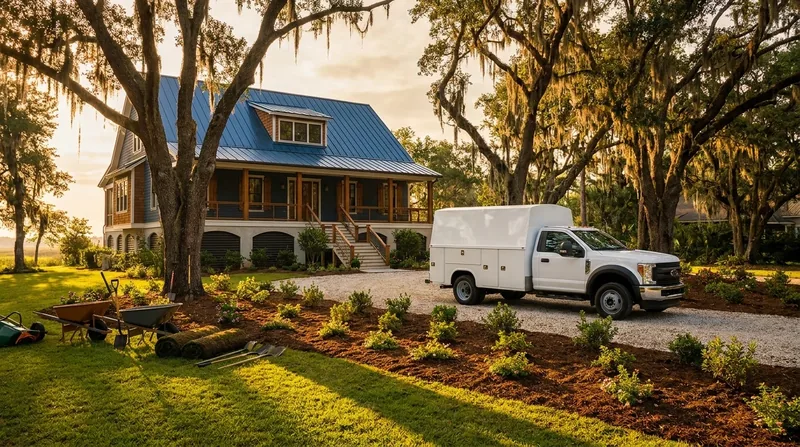
How to Start a Tree Service Business in Louisiana: The Arborist License
How to Start a Tree Service Business in Louisiana: The Arborist License
Louisiana requires anyone who cuts, trims, or removes trees for hire to hold an arborist license issued by the Louisiana Department of Agriculture and Forestry (LDAF). If you are starting a tree service business in Louisiana, getting this license is your first legal step, and it is non-negotiable. Unlike some states where tree work operates in regulatory gray areas, Louisiana enforces its arborist licensing for commercial operations. This guide walks you through exactly what you need to do, the costs, the timeline, and the common traps to avoid.
Why Louisiana Requires an Arborist License
Tree work is dangerous. Without proper knowledge of tree biology, safe climbing techniques, equipment handling, and hazard assessment, people get hurt and property gets damaged. Louisiana's licensing requirement exists to protect both workers and the public. The state wants to know that anyone handling chainsaws and climbing 80-foot pines understands what they are doing.
More than just a formality, the license proves you have demonstrated competency by passing a written exam on arboriculture principles, tree identification, pruning standards, safety practices, and disease management. The state assumes that if you pass, you know your trade.
Who Needs an Arborist License in Louisiana
You need a license if you perform tree work for compensation. That includes:
- Tree trimming and pruning for clients
- Tree removal services
- Tree health consulting and diagnosis
- Stump grinding
- Storm cleanup and tree debris removal (with some exceptions noted below)
If you are working on your own property, you do not need a license. If you are a homeowner removing trees from your own yard, Louisiana does not require arborist certification for that work. But the moment you do it for a fee or for someone else's property, the license requirement kicks in.
There are also utility arborist licenses, which are separate credentials issued for work on utility rights-of-way and powerline clearance. If your tree service contracts with power companies or other utilities, you may need that additional license in addition to the general arborist license. Verify the specific utility company requirements with them directly.
Louisiana Department of Agriculture and Forestry Arborist License: Overview
The LDAF Horticulture Commission oversees arborist licensing in Louisiana. The program is straightforward: pass the exam, apply for the license, pay the fee, and you are good to work. The license does not expire and does not require renewal every year (though you should always verify current requirements with LDAF directly by visiting their website or calling). The exam covers the fundamentals of tree care, and the fee structure is modest compared to other trades.
Costs at a Glance
| Item | Cost | Notes |
|---|---|---|
| Arborist License Exam | $114 | One-time fee to sit for the exam |
| Arborist License (upon passing) | $100 | License fee after you pass the exam |
| Total Initial Cost | $214 | Minimum to be licensed and legal |
These fees are low relative to the return on investment. You are investing $214 to legally operate a business that can bill $50 to $150 per hour or more, depending on the complexity of the work and your market.
Step-by-Step Process: Getting Your Arborist License
Step 1: Prepare for the Exam
The LDAF does not publish an official study guide, but the exam covers standard arboriculture topics. You should be familiar with:
- Common tree species in Louisiana and their characteristics
- Tree anatomy and physiology (root systems, vascular tissues, growth patterns)
- Pruning standards and techniques (ANSI A300 standards are the industry baseline)
- Tree diseases, pests, and pest management
- Safe climbing, rigging, and chainsaw operation
- Hazard assessment and risk management
- Equipment use and maintenance
- Business practices and licensing laws
If you are already a working arborist or have significant experience in tree care, the exam may feel like a formality. If you are new to the industry, you should study. Many people use the International Society of Arboriculture (ISA) study materials and textbooks as preparation. The ISA Certified Arborist exam is a national credential separate from Louisiana's state license, but the knowledge overlap is substantial. Some study guides for the ISA exam are applicable here.
Step 2: Contact the Louisiana Department of Agriculture and Forestry
Schedule your exam appointment with the LDAF Horticulture Commission. You can contact them through the LDAF website at www.ldaf.state.la.us to find the Horticulture Commission section, or call their office directly to get the exam schedule and registration details. Ask specifically about:
- Exam dates and locations
- How to register and pay the $114 exam fee
- What materials (if any) you can bring into the testing room
- How long the exam takes
- When you will receive your results
The exam is typically offered multiple times a year at various locations around the state, so you should be able to find a convenient time and place. The exact locations and schedule vary, so contact LDAF directly rather than relying on outdated information.
Step 3: Take the Exam
Show up with valid identification, arrive early, and bring the registration confirmation or exam notice LDAF sends you. The exam is a written test. You will answer questions on the topics listed above. Pass the exam. Most people who have practical experience in tree work pass on the first attempt, but do not assume. If you fail, you can retake it after paying the fee again.
LDAF will notify you of your results in writing. If you passed, they will provide instructions for the next step: applying for the license.
Step 4: Apply for Your License
Once you have passed the exam, you submit your application to LDAF along with the $100 license fee. The application form should be provided by LDAF with your exam results, or you can request it from their office. Fill it out completely with your name, address, and business information. You are applying for the license itself, not the exam again.
Mail in your application and payment, or if LDAF accepts it, apply and pay online or in person. Check with LDAF on their current process and payment methods.
Step 5: Receive Your License
LDAF will process your application. Turnaround times vary, but it is typically a few weeks. Once approved, you will receive your official arborist license certificate or documentation. At that point, you are legally able to perform tree work for compensation in Louisiana.
Keep your license credentials accessible for job sites. Some clients will ask to see proof of licensure. You are not required to carry it on every job, but having it available demonstrates professionalism and builds client confidence.
Other Licenses and Requirements for Tree Service Businesses in Louisiana
Louisiana State Licensing Board for Contractors (LSLBC)
The LSLBC requires contractors to be licensed in Louisiana if they work on residential or commercial property and meet certain thresholds. For tree service, the threshold rules are complex and depend on whether your work is classified as Landscape Services or another contractor category. Tree removal and significant tree work on residential properties above a certain cost threshold (verify the exact threshold with LSLBC, as rules change) may require a contractor license from the LSLBC in addition to your arborist license.
Start by contacting the Louisiana State Licensing Board for Contractors to confirm whether your specific tree service work requires their license. Do not assume you are exempt. The LSLBC website has a contractor search and licensing information. Being compliant from day one saves you from penalties and lawsuits later.
Business License and Occupational License
Depending on where you operate in Louisiana, you may need a local business license or occupational license from the parish or municipality where you are based or working. These are typically issued at the parish clerk of court or city/town business office. Fees and requirements vary by location. Budget a few hundred dollars total and allow a few weeks for processing. This is separate from the arborist license and the LSLBC contractor license.
Trade Name Registration (DBA)
If you are operating under a business name other than your legal name (for example, Big Tree Service LLC), you may need to register that name with the Louisiana Secretary of State or your local parish clerk of court. The Secretary of State charges a $75 fee for trade name registration. Check with the Secretary of State to confirm current requirements.
Hurricane Debris Work and Expedited Licensing
Louisiana experiences hurricanes. After a major hurricane, demand for tree removal and debris cleanup spikes. The state sometimes offers expedited or temporary arborist licensing or exemptions for out-of-state contractors doing disaster relief work. If you are working on hurricane cleanup, contact LDAF to ask whether special temporary credentials apply. Do not assume you can skip the licensing requirement during an emergency; the rules are strict about this, and enforcement happens even during recovery periods.
Insurance and Bonding
Your license is the legal credential. Insurance and bonding are the financial safety net. You should have:
- General Liability Insurance: Covers property damage and bodily injury. If a tree you are trimming falls and damages a client's house or injures someone, liability insurance protects you. Budget $500 to $1,500 per year depending on your coverage limits and claim history.
- Workers Compensation Insurance: Required by Louisiana if you have employees. Covers medical and wage replacement for injured workers. Costs depend on payroll and your industry classification. Budget at least $1,000 to $2,000 per year if you have one employee.
- Bonding (optional but recommended): Some clients, especially commercial contracts and government jobs, require you to post a bond. A bond guarantees that you will complete work as promised. Bonding costs 1 to 3 percent of the contract value and can usually be obtained quickly once you have insurance.
Do not start taking jobs without insurance. One uninsured accident or injury claim can bankrupt a new business. Get insured before your first paying job.
Getting Started: Equipment, Crew, and Operations
Once you have your license, you are legal to operate. Now you need the tools and the business setup:
Essential Equipment
- Chainsaws (at least two, in case one fails)
- Climbing gear (harness, helmet, carabiners, rope, pulleys)
- Chippers or wood shredders
- Bucket truck or aerial lift (if you do larger removals)
- Hand tools (saws, pruners, loppers, rakes)
- Personal protective equipment (hard hats, safety glasses, gloves, steel-toed boots, hearing protection)
- First aid kit and emergency equipment
- Vehicle to haul equipment and debris
You do not need all of this on day one. Start with the basics and scale up as jobs demand it. A used chipper and basic climbing gear can be found secondhand. Many successful tree services start with a truck, a chainsaw, and a pruning pole, then invest in bigger equipment after landing contracts.
Hiring and Training
If you plan to hire employees or subcontractors, you will need workers compensation insurance and a way to manage payroll and taxes. Make sure anyone working on your crew understands Louisiana's arborist licensing rules. If they are performing tree work, they also need to be licensed or work under direct supervision of a licensed arborist, depending on the specific work and company policy. Clarify this with LDAF and your insurance carrier.
Tips to Avoid Common Mistakes
Do not work without your license. The temptation to start taking side jobs before you have your official credentials is real. Resist it. You are liable to criminal and civil penalties if caught operating without proper licensure. The $214 investment is trivial compared to the fines.
Confirm LSLBC requirements early. Many new tree service operators do not realize they need a contractor license from LSLBC on top of the arborist license. Check this requirement before you bid your first major job. Being unlicensed as a contractor is also illegal and can result in fines and contract cancellation.
Get insurance before the first job. One accident without insurance is catastrophic. Budget the insurance cost into your pricing and get it in place before you accept payment for work.
Verify local permit requirements. Some municipalities and parishes require additional permits or inspections for tree removal, especially if you are working near utilities or in protected areas. Always ask the client or the local municipality office before starting work.
Keep your license and documentation updated. Although the LDAF arborist license does not expire, stay in touch with LDAF about any changes to the licensing program. The tree industry evolves, and regulations can change. Subscribe to LDAF updates or check their website periodically.
Do not hire unlicensed workers to do the actual tree work. You are responsible for compliance. If your crew member is performing tree work without a license, you are liable, not just them. Make sure everyone on your crew is either licensed or working under direct supervision in a way that complies with Louisiana law.
Disclaimers and Next Steps
This article is informational content about starting a tree service business in Louisiana. It is not legal advice, tax advice, or a substitute for consulting with a lawyer or accountant familiar with Louisiana business law. Licensing rules, fees, and requirements can change, and they vary depending on your specific business model and location.
Before you take any action, verify the current requirements directly with the Louisiana Department of Agriculture and Forestry, the Louisiana State Licensing Board for Contractors, and your local parish or municipal business office. The information in this article is current as of October 2026, but you should always confirm with the source agencies.
Here are the official resources you need:
- LDAF Horticulture Commission (arborist licensing): Contact through the Louisiana Department of Agriculture and Forestry main office or website.
- LSLBC (contractor licensing): Visit the Louisiana State Licensing Board for Contractors website for requirements, forms, and fees.
- Local business licensing: Contact your parish clerk of court or city/town business office for local requirements.
- Insurance: Get quotes from at least three insurance brokers who specialize in tree service and arboriculture. Compare coverage, deductibles, and cost.
Once you have confirmed all requirements, passed your exam, received your license, and secured insurance, you are ready to start bidding jobs and building your tree service business in Louisiana. The barriers to entry are relatively low, which is why thousands of tree service operators work in the state. The key difference between those who succeed and those who fail is often professionalism, reliability, and staying on the right side of the law from day one.
Keep exploring: related Louisiana guides
- How to Start a Hunting Guide or Outfitter Business in Louisiana
- How to Start a Commercial Fishing or Shrimping Business in Louisiana
- How to Start a Crawfish Farm in Louisiana
- How to Start an LLC in Louisiana
- Louisiana Business License
- How Much Does It Cost to Start a Business in Louisiana
- All Louisiana business types
- Every Louisiana guide in one place