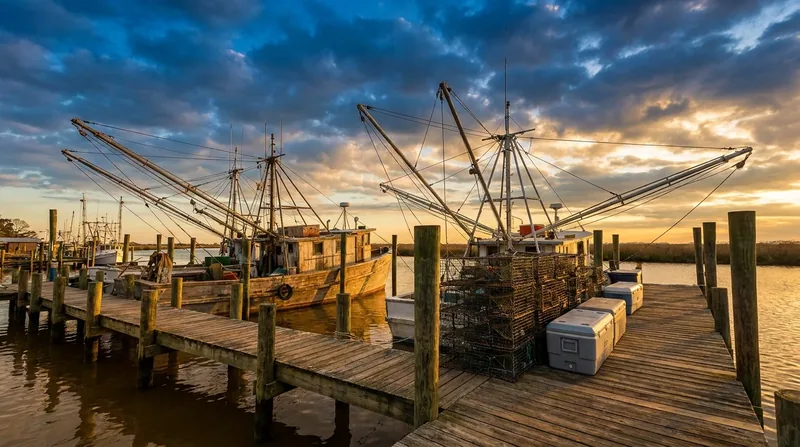
How to Start a Commercial Fishing or Shrimping Business in Louisiana
How to Start a Commercial Fishing or Shrimping Business in Louisiana
Louisiana leads the United States in commercial shrimp landings and is home to one of the world's most productive fishing grounds. If you want to enter the commercial fishing or shrimping industry in Louisiana, you need to understand the licensing, equipment, and regulatory requirements specific to the state. This guide walks you through the process step by step.
Overview: What You Need to Know
Operating a commercial fishing or shrimping business in Louisiana requires state licenses, specific gear approvals, and compliance with Louisiana Department of Wildlife and Fisheries (LDWF) regulations. The process involves obtaining a commercial fisherman license, registering your vessel, and securing any additional licenses for the specific type of fishing you plan to do, whether that is shrimping, oyster harvesting, or crabbing.
Louisiana's commercial fishing industry is heavily regulated to protect marine resources. The state issues licenses for different types of fishing gear and operations. Costs vary depending on your residency status and the type of license you need.
Materials and Equipment You Will Need
Before you can start fishing commercially, you need to have the right equipment and setup in place:
- A fishing vessel: A boat suitable for your type of fishing operation (shrimp trawler, oyster dredge boat, crab trap boat, etc.), with sufficient size and capacity for your target species and proposed fishing area.
- Fishing gear: The specific type depends on what you will harvest (shrimp nets, oyster dredges, crab traps, or other approved gear), and all gear must meet LDWF specifications and size restrictions.
- Commercial vessel documentation or state registration: Your boat must be properly documented with the U.S. Coast Guard (if operating in federal waters) or registered with the state (for state-water operations).
- Safety equipment: Life jackets, emergency signaling devices, fire extinguishers, and other equipment required by the U.S. Coast Guard and state law.
- Navigational equipment: GPS, charts, and communication devices for safe operation and reporting.
- Business documentation: A business license from your local parish or municipality (required by most Louisiana parishes), business formation documents (LLC or sole proprietorship registration if applicable), and liability insurance.
Step-by-Step Process: Getting Your Louisiana Commercial Fishing License
Step 1: Determine Your Residency Status and Fishing Type
Before you apply for any license, clarify whether you are a Louisiana resident or nonresident. License fees and some eligibility requirements differ based on residency. Also, decide exactly what you will fish for, because Louisiana issues separate licenses for different types of commercial fishing operations.
The main categories include commercial shrimping, oyster harvesting, crabbing, and other finfish operations. Each has its own licensing track and gear requirements.
Step 2: Obtain Your Commercial Fisherman License
The foundation for any commercial fishing operation in Louisiana is a commercial fisherman license issued by the Louisiana Department of Wildlife and Fisheries (LDWF). This license applies to all types of commercial fishing.
Cost for residents: $96 for a commercial fisherman license.
Where to apply: Contact the LDWF Licensing Office or apply online through the LDWF website at https://www.wlf.louisiana.gov/. Many parishes also offer license applications at local fishing camps or through authorized agents.
What you need: Proof of Louisiana residency (driver's license or proof of residency affidavit), identification, and payment. Nonresidents will pay a higher fee and may have additional restrictions or quotas on what they can harvest.
Processing time: Licenses are often issued same-day or within a few business days if you apply in person. Online applications typically process within 5 to 10 business days.
Step 3: Obtain Gear-Specific Shrimp and Specialty Licenses
If you plan to fish for shrimp commercially, you will need additional per-gear licenses from the LDWF. Louisiana issues separate licenses for different types of fishing gear used in shrimp operations, such as trawl nets, cast nets, and other approved equipment.
Louisiana commercial shrimp license: In addition to your base commercial fisherman license, you must obtain a license for the specific type of gear you will use. Each gear type has its own licensing requirement and fee. Confirm the exact fee and gear specifications with the LDWF Licensing Office, as rates and regulations are updated periodically.
Gear specifications: All shrimping gear must meet exact size, mesh, and configuration requirements set by the LDWF. Your gear is subject to inspection, and nonconforming equipment will be confiscated. The LDWF publishes detailed specifications on its website.
Seasonal closures: Louisiana has seasonal shrimp fishing closures and area closures to protect breeding stock. You must know the current closure dates before planning your fishing calendar. These dates change and are published by the LDWF.
Step 4: If You Plan to Harvest Oysters, Obtain an Oyster Harvester License and Secure a Lease or Permit
Oyster harvesting is a distinct commercial fishing operation with its own licensing system. Louisiana manages oyster grounds through a combination of public seed grounds and private leases.
Oyster harvester license: You must obtain a separate oyster harvester license from the LDWF. This license is required to harvest oysters from any Louisiana oyster ground.
Oyster lease system: If you want to harvest oysters commercially, you typically must lease oyster grounds from the state. The state has historically issued leases on a first-come, first-served basis in available areas. However, Louisiana has implemented a moratorium on new oyster leases in some areas, with the moratorium lifting in phases as restoration efforts progress. Check the current moratorium status and available lease areas with the LDWF Coastal Resources Division before applying.
Alternative oyster culture permit: If traditional leasing is not available in your target area due to moratorium, the LDWF offers an alternative oyster culture permit for approved oyster farming operations. This permit has specific requirements for gear, water quality management, and harvest reporting.
Lease cost and terms: Oyster lease fees vary by area and acreage. Confirm current lease pricing and availability with the LDWF, as this information changes. Leases are typically annual and renewable, and you must comply with all harvest and reporting requirements to keep your lease active.
Step 5: Register Your Vessel with the State or U.S. Coast Guard
Your fishing vessel must be properly registered or documented before you can legally fish commercially in Louisiana waters or federal waters adjacent to Louisiana.
State registration: For vessels operating only in state waters and under 5 net tons, Louisiana requires state boat registration. Apply with the LDWF or through your local parish sheriff's office. Registration is inexpensive (typically under $50 for most recreational and small commercial boats) and requires proof of ownership and the vessel hull identification number (HIN).
U.S. Coast Guard documentation: If your vessel is 5 net tons or larger, or if you plan to fish in federal waters (beyond state territorial waters), you must apply for documentation with the U.S. Coast Guard. This process takes 2 to 4 weeks and requires detailed vessel specifications, ownership documents, and payment of federal documentation fees. Learn more at https://www.uscg.mil/.
Many commercial fishing vessels are documented, as this provides a legal record of ownership and allows operation beyond state waters.
Step 6: Secure Local Business Licenses and Permits
In addition to state fishing licenses, most Louisiana parishes and municipalities require local occupational license tax or business operating permits. These are separate from your fishing license and are administered at the parish level.
Contact your parish clerk or municipality: Call or visit your parish clerk of court's office or city/town hall to ask about business licensing requirements for commercial fishing or shrimping. Fees vary widely by parish, from $50 to several hundred dollars, depending on the type and size of operation.
What you will need: Proof of state commercial fishing license, vessel registration, business name (if operating as a named entity), and payment of the local fee. Some parishes may also require proof of liability insurance or a business formation document (such as an LLC or sole proprietorship registration).
Step 7: Verify Compliance with Environmental and Reporting Requirements
Louisiana's commercial fisheries have robust reporting and environmental compliance rules to maintain sustainable harvests.
Catch reporting: You are required to report all commercial catches to the LDWF. This typically means submitting harvest landing reports, which detail what you caught, when, and where. These reports are used to monitor stock health and adjust regulations as needed. Failure to report or falsifying reports can result in fines and license revocation.
Fishing grounds and area restrictions: Certain areas of Louisiana waters are off-limits to commercial fishing due to environmental concerns, water quality issues, or conservation closures. The LDWF publishes closure maps and updates them throughout the fishing season. Check the current closures before you fish.
Environmental permits: If you plan to operate from a marina or private dock, check with your local parish or municipality about any environmental discharge or water-use permits that may be required.
Tips for Success in Louisiana Commercial Fishing
- Start with a mentor. Many successful commercial fishers learned from experienced operators. If you are new to the industry, consider working alongside an established fisher before launching your own operation. This will help you understand local conditions, markets, and seasonal patterns.
- Invest in quality equipment. Your boat and gear are your most expensive assets. Well-maintained, quality equipment reduces downtime and increases efficiency. Budget for regular maintenance and upgrades.
- Understand your market. Know who buys your catch and what prices you can expect. Build relationships with seafood processors, wholesale buyers, or direct retail channels early. Market prices fluctuate, so understand how this affects your profitability.
- Stay current on regulations. Fishing rules, closures, and license requirements change frequently. Subscribe to LDWF alerts, attend industry meetings, and maintain contact with your local fishing community to stay informed.
- Keep detailed records. Maintain logs of your catches, expenses, and fishing dates. These records are essential for tax purposes, required reporting, and tracking your business performance.
- Obtain liability and property insurance. A commercial fishing operation carries significant liability and property risk. Work with an insurance broker experienced in marine and fishing operations to get appropriate coverage.
Common Mistakes to Avoid
- Operating without proper licenses. Fishing without a current commercial fisherman license or required specialty license is illegal and can result in substantial fines, vessel seizure, and criminal prosecution. Always verify your licenses are valid before fishing.
- Using nonconforming gear. Fishing with gear that does not meet LDWF specifications violates state law. Gear is regularly inspected, and nonconforming equipment is confiscated. Know your gear specifications and ensure compliance.
- Fishing in closed areas or seasons. Closure violations are a common violation with serious penalties. Consult the LDWF closure maps before each fishing trip and confirm your target area is open.
- Failing to report catches. Catch reporting is mandatory. Missing or late reports trigger investigations and can result in license suspension or revocation. File all required reports on time.
- Underestimating costs. Fuel, maintenance, crew wages, and insurance are substantial expenses. Many new operators overestimate catch and underestimate costs. Create a realistic budget before you launch.
- Operating a vessel that is not properly registered or insured. Vessels must be registered or documented as required by state and federal law. Unregistered vessels cannot legally fish and cannot enter ports. Verify your vessel status before your first trip.
Expected Results and Timeline
If you follow this process, you can expect to be licensed and fishing within 2 to 4 weeks, assuming you have already acquired a suitable vessel and gear. The main variable is how quickly you can gather documentation and apply for licenses. State fishing licenses are often issued within days; vessel documentation takes longer and is the most time-consuming step.
Your first year in the business will be a learning curve. Most new operators do not reach profitability in their first season because they are learning fishing grounds, building market relationships, and managing unexpected equipment or operational challenges. Many experienced fishers recommend budgeting for 1 to 2 years before expecting steady income.
Louisiana's position as the nation's leading shrimp state reflects both the abundance of wild seafood resources and a well-established commercial fishing culture. Success depends on obtaining proper licenses, investing in quality equipment, understanding local regulations, and building relationships within the fishing community.
Important Disclaimer
This article is for informational purposes only and does not constitute legal, tax, or business advice. Commercial fishing regulations, licensing requirements, fees, and availability change frequently and vary by species, gear type, and location within Louisiana. Before starting a commercial fishing operation, consult with the Louisiana Department of Wildlife and Fisheries, a qualified business attorney, and a tax professional familiar with commercial fishing operations in Louisiana. Verify all fees, licensing requirements, and closure dates with the appropriate state agencies before making business decisions or investments.
For the most current information, contact the Louisiana Department of Wildlife and Fisheries at https://www.wlf.louisiana.gov/ or call their licensing office directly. Additional resources are available through local fishing industry associations and parish government offices.
Keep exploring: related Louisiana guides
- How to Start a Tree Service Business in Louisiana
- How to Start a Crawfish Farm in Louisiana
- How to Start a Hunting Guide or Outfitter Business in Louisiana
- How to Start an LLC in Louisiana
- Louisiana Business License
- How Much Does It Cost to Start a Business in Louisiana
- All Louisiana business types
- Every Louisiana guide in one place