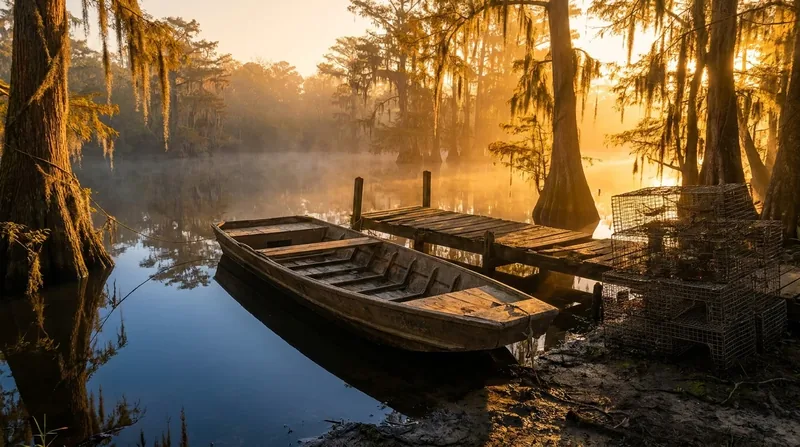
How to Start a Swamp Tour Business in Louisiana
How to Start a Swamp Tour Business in Louisiana
A swamp tour business capitalizes on Louisiana's unique ecosystem and tourism appeal. Whether you're launching from New Orleans or rural parishes, the path to running a legitimate swamp tour operation requires a USCG captain's license, proper vessel registration, business entity formation, and compliance with local occupational licensing. This guide walks through every step.
What You Need to Know First
Swamp tours serve two distinct markets. Tourist-focused tours (concentrated in the New Orleans area, where "new orleans swamp tour" draws approximately 2,986 monthly searches) typically operate with smaller vessels carrying 6 to 25 passengers. Educational and nature tours target different demographics. The USCG licensing tier you pursue determines your vessel class and passenger capacity, which in turn shapes your revenue model and startup costs.
The regulatory framework is layered: federal (USCG), state (Louisiana Secretary of State), and parish (local occupational licenses and noise ordinances). Airboat operators face particular scrutiny on noise levels in populated areas.
USCG Licensing Requirements
The U.S. Coast Guard regulates commercial passenger vessel operation through three main pathways:
OUPV (Operator of Uninspected Passenger Vessel)
An OUPV captain's license allows you to carry up to 6 passengers on an uninspected vessel. This is the minimum threshold for legitimate commercial swamp tours. You do not need a full vessel inspection from the USCG for 6 or fewer passengers, which significantly reduces entry costs. However, your vessel must still meet basic safety standards: working navigation lights, lifejackets, fire extinguishers, and first aid kits.
OUPV certification requires passing the USCG captain's exam (covering navigation, seamanship, federal maritime law, and vessel operation) and a background check. The exam is offered at USCG Regional Examination Centers. Processing time is typically 4 to 6 weeks after passing the exam and submitting your application packet.
Master's License (Inspected Vessel)
If you want to carry more than 6 passengers, you'll need a full Master's license and an inspected vessel. The USCG inspection is rigorous and includes stability testing, machinery inspection, life-raft certification, and emergency procedures approval. An inspected vessel operation is substantially more expensive to launch and maintain, but opens your passenger capacity to 25, 50, or more passengers depending on vessel size and configuration.
Most entry-level swamp tour businesses start with OUPV (6 passengers) to minimize upfront costs. Expansion to inspected operations comes later as demand and revenue justify the investment.
Business Entity Formation
Before operating as a swamp tour business, establish a legal entity with the Louisiana Secretary of State. You have three options:
Limited Liability Company (LLC)
An LLC protects your personal assets from business liabilities and is the most common choice for small tour operators. Filing fee is $100. Submit Form 365 (Articles of Organization) to the Louisiana Secretary of State, Commercial Division, online at geauxBIZ. Standard processing takes 5 to 10 business days; expedited options are available ($30 for 24-hour processing, $50 for while-you-wait at the Baton Rouge office).
Annual report fee is $30, due each year on or before your LLC's anniversary of organization.
Sole Proprietorship
Operating as a sole proprietor requires no state filing or formation fee. However, you'll likely still need a Trade Name Registration (also called a DBA) filed with your parish clerk of court if your business name differs from your personal name. Parish clerk fees for DBA filings vary by location; New Orleans charges $75, but confirm your specific parish.
Corporation
A corporation (Form 399) incurs higher ongoing costs (annual report fee $30, formation fee $75) and is less common for small tour operations. Unless you have specific governance or investment reasons to incorporate, an LLC is simpler.
Occupational License and Local Compliance
Louisiana does not issue a statewide general business license. Instead, your parish and municipality levy their own occupational license tax. Orleans Parish (which includes New Orleans) charges an occupational license fee based on business classification; specific rates and thresholds vary. Contact your parish assessor's office for your swamp tour business classification and fee.
Many rural parishes also require occupational licenses. Apply through your parish clerk of court or assessor's office. Fees typically range from $50 to $200 annually, but verify your specific parish.
Local Noise and Environmental Rules
Airboat operations are subject to parish and municipal noise ordinances. Airboats are loud; check with your local planning and zoning department or parish environmental office for decibel limits and quiet-hour restrictions. Some areas prohibit high-speed airboat operation during specific hours or in sensitive habitats. Violating noise ordinances can result in fines and closure orders.
If operating in wildlife management areas or protected wetlands, obtain written permission from the Louisiana Department of Wildlife and Fisheries (LDWF) or the managing agency. Some areas prohibit commercial tour operations entirely.
Sales Tax and Federal Employer ID
Louisiana's statewide sales tax is 5%. Most swamp tour services are not subject to sales tax (they're typically classified as entertainment services), but confirm with the Louisiana Department of Revenue at revenue.louisiana.gov.
Apply for a Federal Employer ID (EIN) from the IRS, even if you have no employees initially. This is free and required for business bank accounts. Apply online at irs.gov.
Vessel and Equipment Needs
Your swamp tour vessel is your largest capital expense. Options include:
Airboat
An airboat with shallow draft and high maneuverability is ideal for swamps. Used airboats (12 to 18 feet) start around $15,000 to $30,000. New boats run $40,000 to $80,000+. Airboats require ongoing fuel, maintenance, and propeller/engine overhauls. Noise is a factor in populated areas.
Cabin Cruiser or Converted Fishing Boat
A 25 to 35-foot cabin cruiser designed for coastal or shallow-water operation can accommodate 6 to 25 passengers with comfort amenities (shade, restroom). Used boats range from $20,000 to $60,000. Fuel and slip fees are ongoing costs.
Pontoon Boat
Pontoon boats are stable, spacious, and accessible for elderly or mobility-limited passengers. A used 20 to 25-foot pontoon runs $8,000 to $20,000. New models cost $30,000+. Pontoons are slower and less nimble than airboats but more comfortable for long tours.
Essential Safety Equipment (All Vessel Types)
- Coast Guard-approved lifejackets for all passengers (buy extras for different sizes; budget $500 to $1,500)
- Fire extinguishers (ABC-rated, Coast Guard-approved; $150 to $300)
- First aid kit (marine-grade, regularly restocked; $100)
- Navigation lights (LED replacements, spares; $200 to $400)
- Throwable floats or rescue rings (USCG Type IV PFD; $100 to $200)
- Horn and signaling equipment ($50 to $150)
- Tool kit, spare engine belts, fuel filters, and basic repair supplies ($300 to $600)
Step-by-Step Launch Checklist
Step 1: Pass the USCG Exam (Weeks 1 to 4)
Enroll in a USCG captain's exam prep course (offered by maritime academies and online providers; typically $300 to $800). Study materials cover seamanship, navigation rules, vessel safety, and emergency procedures. Schedule your exam at the nearest USCG Regional Examination Center. Allow 4 to 8 weeks of study.
Step 2: Gather Documents for USCG Application (Week 3 to 4)
You'll need a government-issued ID, proof of sea service (typically 360 days working on vessels in the past 5 years; document this carefully), a medical certificate, and a character reference. Your exam provider will clarify exactly what counts as sea service.
Step 3: Form Your Business Entity (Week 1 to 2)
Decide on LLC, sole proprietorship, or corporation. If LLC or corporation, file with the Louisiana Secretary of State using geauxBIZ. Use expedited processing ($30 or $50) to avoid delays. Choose a name that includes "Swamp Tours," "Bayou Tours," or similar descriptors for marketing clarity. Verify the name is available by searching at the Secretary of State business search.
Step 4: Register for Occupational License (Week 2 to 4)
Contact your parish assessor's office or clerk of court. Provide your business name, entity formation documents, and owner information. Pay the occupational license fee. This is often required before you can legally operate.
Step 5: Obtain Federal EIN (Week 1 to 2)
Apply for an EIN online at irs.gov. It's immediate or takes a few days by mail. Use your EIN to open a business bank account.
Step 6: Secure Your Vessel and Inspect (Week 4 to 8)
Purchase or lease your swamp tour boat. Have a marine surveyor inspect it ($300 to $800 for OUPV-class inspection). Ensure it has title, registration, and current liability insurance (required to operate commercially). Liability insurance for a 6-passenger tour business typically costs $800 to $1,500 per year.
Step 7: Install Safety Equipment (Week 6 to 8)
Install lifejackets (properly sized and stored), fire extinguishers, first aid kit, navigation lights, and emergency signals. Test all systems. Ensure you have a documented maintenance log.
Step 8: Submit USCG Paperwork (After Exam Pass)
Once you've passed your USCG exam, submit your application packet (exam results, medical certificate, sea service documentation, background check authorization) to the regional USCG office. Processing is typically 4 to 6 weeks. Your captain's license will be issued by mail.
Step 9: Local Permits and Permissions (Ongoing)
If operating in state wildlife areas or protected wetlands, submit a tour operation permit request to the Louisiana Department of Wildlife and Fisheries. Contact your parish zoning or planning office to confirm no noise or environmental restrictions block your launch location. Obtain written approval if required.
Step 10: Launch Marketing and Bookings (Week 8+)
Once licensed and insured, set up a website, booking system, and payment processing. "New orleans swamp tour" is a primary search term for your target market. Include safety disclaimers, age/mobility requirements, weather cancellation policies, and pricing on your site. Build a social media presence and respond to online reviews.
Common Mistakes to Avoid
Operating without a USCG license. This is federal law. Penalties include fines up to $25,000 and vessel seizure. Never skip this step.
Underestimating insurance costs. Liability insurance is non-negotiable and can exceed your initial budget. Quote it early in planning.
Ignoring local noise ordinances. Airboat operators in built-up areas often face cease-and-desist orders. Know your parish's rules before buying an airboat.
Operating in off-limits wildlife areas. Check with LDWF before selecting your launch location. Some sensitive habitats prohibit commercial tours entirely.
Skipping the occupational license. Operating without one exposes you to fines and lawsuit liability. Register early.
Failing to document sea service correctly. USCG sea service rules are strict. Missing documentation can delay or deny your license application by months.
Expected Results and Timeline
A swamp tour business can be operational in 3 to 4 months if you pursue OUPV licensing (6 passengers). From launch, you may realistically expect to book 3 to 6 tours per week in the first season, depending on location and marketing. A 6-passenger tour charging $200 to $400 per person (industry standard) generates $1,200 to $2,400 per tour. After fuel, maintenance, and insurance, net profit margins are typically 30 to 50% in the first year.
Note: These are generalizations. Your actual results will depend on location (New Orleans tours are more bookable than rural areas), season (summer and fall typically see higher demand), your operator reputation, and marketing effectiveness. Weather and mechanical issues also disrupt bookings; plan for 20 to 30% cancellations in your first year.
Disclaimer
This article is informational only and does not constitute legal, tax, or financial advice. Swamp tour business regulations vary by parish and can change. Consult a Louisiana business attorney and a CPA before finalizing your business structure and operating plan. Verify all fees, licensing requirements, and local regulations with the appropriate state and parish agencies before proceeding.
Resources
- Louisiana Secretary of State: sos.la.gov/business-services (business entity formation and online filing via geauxBIZ)
- USCG Marine Safety: uscg.mil (captain's license info and exam locations)
- Louisiana Department of Revenue: revenue.louisiana.gov (occupational license and sales tax info)
- Louisiana Department of Wildlife and Fisheries: wlf.louisiana.gov (wildlife area tour permits)
- Louisiana SBDC: louisianasbdc.org (free business counseling and startup resources)
- IRS EIN Application: irs.gov/ein (Federal Employer ID)
Keep exploring: related Louisiana guides
- How to Start a Fishing Charter Business in Louisiana
- How to Start a Tour Company in New Orleans
- How to Start an Airbnb in New Orleans
- How to Start an LLC in Louisiana
- Louisiana Business License
- How Much Does It Cost to Start a Business in Louisiana
- All Louisiana business types
- Every Louisiana guide in one place