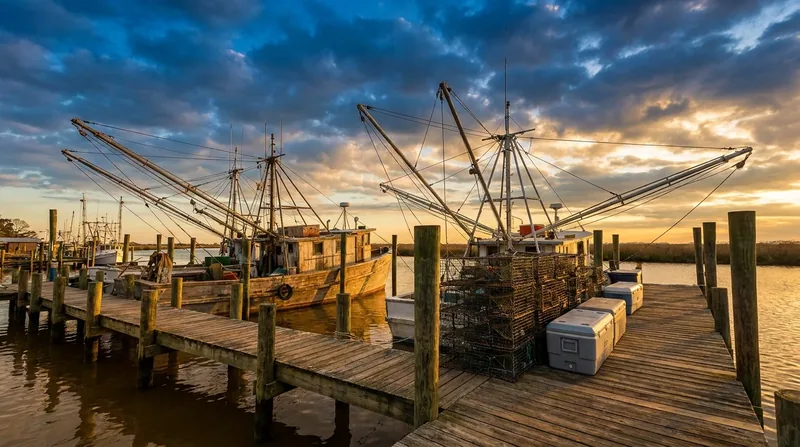
How to Start a Fishing Charter Business in Louisiana
How to Start a Fishing Charter Business in Louisiana
Louisiana has some of the best saltwater and freshwater fishing in the country, and the charter fishing business is a proven way to turn that into income. Whether you want to guide anglers after redfish and speckled trout in the coastal marshes, or catfish and bass in the freshwater systems, you will need specific licenses, business registration, and insurance before your first charter leaves the dock.
This guide covers the exact steps, fees, and timelines to legally start a fishing charter business in Louisiana, plus the common mistakes to avoid.
Step 1: Choose Your Business Structure
Decide whether you will operate as a sole proprietor, a limited liability company (LLC), or a corporation. Most charter captains choose an LLC because it separates personal liability from business liability. If a passenger is injured or property is damaged, an LLC protects your personal assets.
A sole proprietorship is simpler to set up but offers no liability protection. A C corporation adds more paperwork and taxes but may make sense later if you grow to multiple boats.
For this guide, we will assume you are forming an LLC, which is the most common structure for fishing charter businesses in Louisiana.
Step 2: Obtain Your USCG OUPV Captain License
Before you can legally take paying customers onto a fishing boat in Louisiana, you must hold a valid USCG OUPV license, also known as a six-pack license. OUPV stands for Uninspected Passenger Vessel. This license allows you to take up to six paying passengers for fishing. If you want to take more than six passengers, you will need a Master license, which requires additional training and exams.
To get your OUPV license, you will need to:
- Provide proof of sea service (at least 730 days on vessels, including time on fishing boats)
- Pass a medical exam by a Coast Guard-approved physician
- Pass a written exam covering navigation, rules of the road, safety, and seamanship
- Pay the USCG application fee (currently around $130 to $200)
The USCG does not publish a fixed processing time, but expect 4 to 8 weeks after you submit a complete application. You can apply online through the USCG National Maritime Center (NMC) at thecg.nmc.uscg.mil. Many captains use a maritime academy or test-prep service to study, as the exam covers detailed regulations.
Step 3: Obtain Your Louisiana Charter Guide License
In addition to the USCG license, Louisiana requires you to hold a Louisiana Department of Wildlife and Fisheries (LDWF) charter guide license. This is a state license specific to charter operations and protects Louisiana fisheries.
There are two types of charter guide licenses in Louisiana:
- Saltwater Charter Guide License: Required if you are fishing saltwater. Costs $275 if you are a resident and you will take 6 or fewer paying passengers per trip. If you will take more than 6 passengers, the license costs $650. Non-residents pay $325 to $825.
- Freshwater Charter Guide License: Required if you are fishing freshwater. Costs $150 for residents and $225 for non-residents.
You can apply for your LDWF charter guide license at the LDWF website or by visiting your local LDWF field office. You will need to provide proof of your USCG OUPV license and proof of residency (if claiming resident rates). Processing typically takes 1 to 2 weeks.
Your charter guide license must be renewed annually. Mark the renewal date on your calendar so you do not let it lapse and risk losing your fishing charter business.
Step 4: Register Your Business With Louisiana Secretary of State
Once you have your licenses, you need to formally register your fishing charter business with the state of Louisiana. If you are forming an LLC (recommended), you will file Articles of Organization with the Louisiana Secretary of State, Commercial Division.
To register an LLC in Louisiana:
- Choose a business name that includes "LLC," "L.L.C.," or "Limited Liability Company." The name must be distinguishable from other registered businesses and cannot imply it is a government agency.
- File Articles of Organization using geauxBIZ, the Secretary of State's online filing portal at https://geauxbiz.sos.la.gov/. The online form is straightforward.
- Pay the filing fee of $100 for standard processing. Expedited options cost $30 (24-hour processing) or $50 (while-you-wait at the Baton Rouge office).
- Appoint a registered agent with a physical Louisiana street address. This person (or company) receives legal documents on behalf of your LLC. The registered agent address is public.
Your LLC filing typically takes 3 to 5 business days for standard processing, or same-day for the $50 priority option if you go in person.
After your LLC is approved, keep your Articles of Organization certificate on file. You will need it for the next steps.
Step 5: Register Your Vessel
Your fishing charter boat must be registered with Louisiana or the USCG (depending on size and use). Most recreational and commercial fishing charter boats under 25 tons are registered with Louisiana.
To register your vessel:
- Visit your local Louisiana Department of Motor Vehicles office and apply for vessel registration.
- Bring proof of ownership (title, bill of sale, or builder's certificate), proof of the vessel's hull identification number (HIN), and proof of your business registration (LLC filing).
- Pay the registration fee. Rates vary by vessel type and size, but expect $100 to $300 for a fishing charter boat.
- Display your registration numbers on the hull as required by law.
Louisiana registration is valid for one year and must be renewed annually. Some charter captains also carry USCG documentation instead of Louisiana registration if the boat is large enough. Check with Louisiana Department of Motor Vehicles to determine which registration is required for your specific vessel.
Step 6: Obtain Business Insurance
Do not take paying customers on your boat without insurance. Louisiana law does not require you to carry specific insurance minimums for a fishing charter, but your boat lender, marina, or customers will require it, and it is essential to protect your business.
Obtain a Commercial Fishing Vessel Policy or Charter Boat Policy that covers:
- Hull coverage (damage to your boat)
- Liability coverage (injury or damage caused to passengers or third parties). Minimum recommended: $300,000 to $500,000.
- Medical payments coverage for passenger injuries
- Uninsured boater coverage
Work with an insurance broker who specializes in commercial fishing or marine charter operations. They can explain Louisiana-specific requirements and help you get the right coverage at a fair price. Budget $1,500 to $3,000 per year for insurance, depending on your boat size and the number of trips per week.
Step 7: Obtain Tax Registration and Permits
Your fishing charter business is subject to Louisiana state and local taxes. Register for:
- Louisiana Sales Tax Permit: If you charge for trips, you may owe sales tax to Louisiana. Register with the Louisiana Department of Revenue at https://revenue.louisiana.gov/. Louisiana's state sales tax is 5%, but your parish may add additional local tax. The Department of Revenue will tell you the total rate for your area. Registration is free and takes about 1 week.
- Louisiana Employer Identification Number (EIN): If you are hiring crew members, you need an EIN from the IRS and will owe payroll taxes. Apply at the IRS website.
- Occupational License: Some Louisiana parishes and municipalities require an occupational license or business tax to operate. Check with your local Parish Clerk of Court or city hall to confirm requirements in your area. Fees vary by parish, but expect $50 to $300 per year.
Louisiana has a flat 3% personal income tax and a flat 5.5% corporate income tax. If you operate as a sole proprietor, income passes through to your personal tax return at the 3% rate. An LLC taxed as a corporation pays the 5.5% rate. Consult a Louisiana CPA to determine the best tax structure for your specific situation.
Step 8: Ensure Safety and Compliance
Before taking your first charter, make sure your boat meets all safety requirements:
- Life jackets and personal flotation devices (PFDs) for all passengers (USCG requirement). Every person on board must have a properly fitting Coast Guard-approved PFD available.
- Fire extinguishers rated for marine use and mounted in accessible locations.
- First aid kit and seasickness medication.
- Radio and signaling equipment (VHF radio, distress beacon).
- Navigation equipment (GPS, chart plotter, radar if applicable).
- Up-to-date vessel documentation or registration.
The USCG may inspect your boat at any time to verify compliance. Failure to carry required safety equipment can result in fines or loss of your OUPV license.
Step 9: Hire and Manage Crew (If Applicable)
If you hire a mate or crew member, they may also need a fishing guide license or other certifications depending on their role. Anyone who is paid to assist with fishing or passenger safety should hold appropriate certifications.
You will be responsible for withholding income tax and FICA taxes from their wages. Consult a payroll service or accountant to set this up correctly.
Step 10: Market and Launch Your Charter
Once you are licensed and registered, you can start taking charter customers. Common ways to book charters include:
- Create a website with rates, photos, and booking information.
- List your charters on platforms like TripAdvisor, Airbnb Experiences, or Viator.
- Partner with local hotels and tourism boards to get referrals.
- Use social media (Instagram, Facebook) to post photos of catches and reviews.
- Join local fishing guide associations and networks for referrals.
Set competitive rates based on local market rates and your experience level. Most Louisiana saltwater charters charge $400 to $800 per half-day trip and $600 to $1,200 per full day for 1 to 6 passengers.
Materials and Compliance Checklist
Before your first charter trip, gather and verify the following:
- USCG OUPV six-pack license (photocopy and original on hand)
- Louisiana LDWF charter guide license (photocopy and original on hand)
- LLC Articles of Organization filed with Louisiana Secretary of State
- Vessel registration from Louisiana DMV
- Commercial fishing charter insurance policy
- Louisiana Sales Tax permit number
- Safety equipment: life jackets, fire extinguishers, first aid kit, radio, GPS
- Fishing tackle, bait, coolers for fish
- Captain's log or trip record book for compliance
- Emergency contact information and waiver forms for passengers
Tips for Success
- Know your local waters: The best charter captains know their fishing grounds like the back of their hand. Spend time scouting, learning seasonal patterns, and understanding where fish are holding month to month.
- Prioritize safety: A negative safety incident can ruin your reputation instantly. Over-communicate safety procedures, enforce life jacket use, and never take unnecessary risks.
- Maintain your license: Mark renewal dates for your OUPV, LDWF guide license, vessel registration, and insurance. Letting any of these lapse will shut you down.
- Keep detailed records: Track trip dates, passengers, catches, expenses, and income for tax purposes and legal protection.
- Build relationships: Fishing is social. Return customers and word-of-mouth referrals are the lifeblood of a charter business. Treat every customer well and follow up after each trip.
- Stay informed on regulations: Fishing regulations, bag limits, and season closures change regularly. Subscribe to LDWF updates and check regulations before each trip to avoid violations.
Common Mistakes to Avoid
- Operating without the right licenses: Many new charter operators underestimate the importance of the LDWF charter guide license. Do not operate without it, even for one trip, or you will face fines and loss of your business.
- Skipping insurance: An accident or injury lawsuit without insurance can wipe you out financially. Do not cut corners on coverage.
- Misunderstanding sales tax: Charter revenue in Louisiana is subject to sales tax. Forgetting to charge it to customers or failing to remit it to the state creates tax liability.
- Taking too many passengers: If your OUPV license allows 6 passengers but you take 7, you are operating illegally. Stick to your license limits.
- Neglecting maintenance: A broken boat means lost income and angry customers. Budget 5 to 10 percent of revenue for regular maintenance and inspections.
- Poor record keeping: The IRS and LDWF may audit you. Keep detailed records of all trip revenue, expenses, and passenger counts.
Expected Results and Getting Started
Starting a fishing charter business in Louisiana typically takes 4 to 8 weeks from start to first charter, assuming you already have your OUPV license. If you need to get your OUPV license first, add another 2 to 3 months.
Total startup costs typically range from $5,000 to $15,000 in licensing, registration, insurance, and safety equipment (not including the boat itself). Once you are operating, expect to earn $200 to $400 per charter after expenses, depending on trip length, number of passengers, and local demand.
Most charter captains break even in the first year and see profit growth in years 2 and 3 as their customer base and reputation grow.
Important Disclaimer
This article is informational guidance on starting a fishing charter business in Louisiana and does not constitute legal or tax advice. Regulations, fees, and requirements can change. Before you invest time and money, consult with a Louisiana attorney familiar with fishing charter regulations and a CPA experienced in marine businesses to ensure you understand all requirements specific to your situation and location. The Louisiana Secretary of State's website at https://www.sos.la.gov/business-services and the LDWF website have additional details on licensing and compliance.
Keep exploring: related Louisiana guides
- How to Start an Airbnb in New Orleans
- How to Start a Swamp Tour Business in Louisiana
- How to Start a Tour Company in New Orleans
- How to Start an LLC in Louisiana
- Louisiana Business License
- How Much Does It Cost to Start a Business in Louisiana
- All Louisiana business types
- Every Louisiana guide in one place