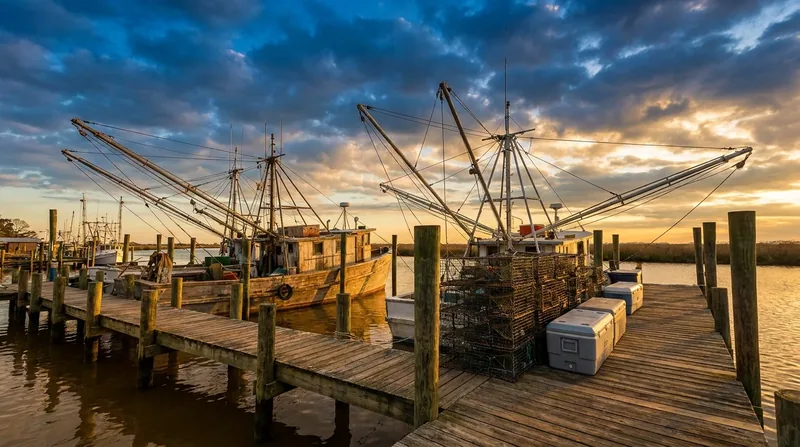
How to Open a Seafood Market or Seafood Dealer Business in Louisiana
How to Open a Seafood Market or Seafood Dealer Business in Louisiana
Louisiana's position as the Gulf's leading seafood producer makes it a natural place to start a seafood dealership. Whether you want to open a retail seafood market, operate as a wholesale distributor, or run a processing facility, you'll need specific state licenses and careful attention to food safety regulations. This guide walks you through every requirement, from initial licensing to HACCP compliance.
Understanding Louisiana's Seafood Dealer Regulatory Framework
Louisiana treats seafood dealing as a licensed activity, not just a business registration. The state recognizes two distinct tracks: wholesale/retail dealers (licensed by LDWF, the Louisiana Department of Wildlife and Fisheries) and processors who handle product transformation (governed by LDH, the Louisiana Department of Health, under HACCP rules). Most small operations start as dealers; if you'll be processing seafood beyond simple display and sale, you'll need both licenses.
The key regulators are the Louisiana Department of Wildlife and Fisheries (LDWF) for dealer licensing and the Louisiana Department of Health (LDH) for food safety and processing permits. These agencies work in parallel, and both approvals are required before you can legally sell seafood to the public or to other businesses.
Key Licensing and Permit Requirements
Louisiana Seafood Wholesale/Retail Dealer License (LDWF)
Every person or business that buys, sells, or distributes Louisiana-sourced seafood must hold a valid dealer license from LDWF. This applies whether you're selling direct to consumers, supplying restaurants, or operating as an intermediary between harvesters and retailers. The fee depends on your residency status: $550 per year for Louisiana residents and $2,200 per year for nonresidents. The license must be renewed annually.
To qualify, you must hold a valid Louisiana driver's license or state ID (for individuals), or register your business with the Louisiana Secretary of State. LDWF will verify your identity and check for any violations of seafood commerce rules. The application process typically takes one to two weeks, though you should verify the current turnaround with LDWF directly.
LDH Commercial Seafood Permit and HACCP Plan
If your operation involves any processing, cooking, freezing, smoking, or packaging of seafood (beyond simply receiving and displaying it for sale), Louisiana law requires a commercial seafood permit from the Louisiana Department of Health. This is separate from the LDWF dealer license. The LDH permit requires that your facility meet specific sanitation standards and that you implement a written HACCP (Hazard Analysis and Critical Control Points) food safety plan. You should contact the LDH Office of Public Health to confirm the current permit fee and application timeline; these details change and are best verified directly with the agency.
HACCP is a systematic approach to food safety that identifies potential biological, chemical, and physical hazards at each stage of your process, then defines critical control points where you monitor and correct problems. For a small seafood business, your HACCP plan might address temperature control, cross-contamination prevention, supplier verification, and traceability. An LDH inspector will review your plan and facility before approving the permit.
Step-by-Step Setup Guide for Your Seafood Dealership
Step 1: Register Your Business Entity (1 to 2 weeks)
Before you apply for a seafood dealer license, establish your legal business structure. You can operate as a sole proprietorship, LLC, or corporation. Most small seafood dealers choose an LLC for liability protection and simplicity. If you go that route, file Articles of Organization with the Louisiana Secretary of State (filing fee: $100). The standard processing time is 2 to 3 weeks without expedite, though LDWF expedite options are available for $30 to $50.
If you're an individual sole proprietor, you can skip this step and proceed with your personal identification. Either way, LDWF will need a copy of your business registration or your state ID.
Step 2: Secure a Physical Location (Ongoing)
Identify and lease or purchase a facility appropriate for your intended operation. A wholesale-only distribution facility has simpler requirements than a retail market with customer access, and a retail market has different needs than a processing facility. Your location must have proper utilities (refrigeration for fresh product, hot water for sanitation), parking (if retail), and zoning approval from your local parish or municipality for a seafood business.
Do not sign a lease until you've confirmed with your local government that seafood dealing is permitted in your proposed location and that any local occupational licenses or conditional use permits are available. Many parishes require local permits or special approvals for food businesses, and these can take several weeks to obtain.
Step 3: Prepare Your Facility and Equipment (2 to 8 weeks)
Your facility must support safe seafood storage and handling. Essential equipment includes commercial refrigeration units (proper temperature maintenance is critical), stainless steel work surfaces, hand-washing stations, waste management systems, and adequate lighting and drainage. If you're doing any processing, you'll also need equipment specific to your process, such as a smoker for smoked fish, a freezer for frozen products, or a cooking station for prepared items.
All equipment must be food-grade and cleanable. Your facility layout should prevent cross-contamination between raw and ready-to-eat products, and between seafood and other foods. An LDH inspector will evaluate these elements when you apply for your commercial seafood permit, so budget time to remediate any deficiencies they identify.
Step 4: Develop Your HACCP Plan (1 to 3 weeks)
If you're processing seafood, write your HACCP plan before you meet with LDH. The plan should document the flow of product through your facility, identify hazards at each step (such as temperature abuse, pathogenic contamination, or physical hazards), define your critical control points (such as cooking temperature or storage temperature), set monitoring procedures, and establish corrective actions if standards are not met.
Your HACCP plan should also address supplier verification (confirming that your raw seafood comes from legitimate, traceable sources), traceability (so you can identify which lots went where if a recall is needed), and staff training on food safety practices. For a small operation, a one to two page written plan may be sufficient; LDH will advise whether yours is adequate and compliant.
Step 5: Apply for Your LDWF Wholesale/Retail Dealer License (1 to 2 weeks)
Contact the Louisiana Department of Wildlife and Fisheries, Licensing Division, to request a dealer license application. You can apply online or by mail. Provide your business registration documents (or proof of identity if you're a sole proprietor), proof of Louisiana residency (if claiming the resident rate), and information about your facility and intended operations.
Submit your application with the appropriate fee: $550 for residents, $2,200 for nonresidents. LDWF will process your application, typically within one to two weeks. Once approved, your license will be issued and you can legally buy and sell Louisiana seafood.
Step 6: Apply for Your LDH Commercial Seafood Permit (2 to 4 weeks)
Contact the Louisiana Department of Health, Office of Public Health, to request a commercial seafood permit application. Submit your completed HACCP plan, documentation of your facility (photos, floor plans, equipment lists), your LDWF dealer license or license application, and any other required forms. Schedule an inspection with an LDH sanitarian. During the inspection, they will verify that your facility meets sanitation standards and that your HACCP plan aligns with your actual operation.
If deficiencies are identified, you'll have an opportunity to correct them and request a follow-up inspection. Once your facility passes inspection and your HACCP plan is approved, LDH will issue your commercial seafood permit. Current fee information should be confirmed directly with LDH, as permit costs vary by operation type and may have changed.
Step 7: Verify Local and Federal Requirements (1 to 2 weeks)
Confirm that your local parish has approved your occupational license or conditional use permit, if required. Check whether you need any additional permits from your municipality (such as a health department permit) or from the FDA (if you're planning multi-state distribution, you may need to register as a seafood processor with the FDA's FSMA regulations).
Equipment and Supplies You'll Need
Your specific needs depend on whether you're operating a retail market, a wholesale distribution facility, or a processing operation. Here are the essentials most seafood dealers require:
- Refrigeration: Commercial-grade units (reach-in coolers, walk-in coolers, or both) to maintain product at 35 to 40 degrees Fahrenheit for fresh seafood. Proper thermometers and temperature logging systems to document compliance.
- Work surfaces and prep equipment: Stainless steel tables, cutting boards, knives, and ice-making or ice-storage equipment for display and product cooling.
- Display and sale equipment: For retail: refrigerated display cases, scales, labeling equipment, and checkout counters. For wholesale: organized shelving and packing materials.
- Sanitation supplies: Hand-washing stations with hot water, sanitizing agents approved for food contact, cleaning cloths, and waste disposal containers.
- Traceability and record-keeping: Systems to document supplier information, lot numbers, processing dates, and product distribution. Even simple handwritten logs are acceptable if they're complete and organized.
- Processing equipment (if applicable): Smokers, freezers, cooking equipment, or other machinery specific to your intended processes.
Common Mistakes to Avoid
Starting without a dealer license. Operating without your LDWF dealer license is illegal and subjects you to penalties. Don't source product until your license is in hand.
Underestimating the LDH permit timeline. Many operators are surprised by how long the inspection and approval process takes. Begin this process early and budget 4 to 6 weeks from first contact to final approval.
Skipping the HACCP plan or treating it as paperwork theater. Your HACCP plan must reflect your actual operation. An inspector will compare your written plan to your practice on the day of inspection. If they don't match, your permit will be delayed or denied.
Poor temperature management. Keeping seafood at safe temperatures is non-negotiable. Invest in reliable refrigeration and check temperatures daily. Temperature abuse is the most common cause of seafood safety violations.
Buying from unlicensed harvesters or sources. Purchase only from licensed Louisiana harvesters or from suppliers who provide documentation of their own licensing. Unlicensed product is not legally tradeable and will be confiscated.
Overlooking local requirements. Many operators focus on state-level licensing but forget to check with their parish or city. Missing a local permit can result in fines or shutdown orders, even if your state licenses are in order.
Timeline and Cost Summary
Here's what you can expect to invest in time and money to launch a compliant seafood dealership:
| Activity | Timeline | Cost |
|---|---|---|
| Business registration (LLC or sole proprietorship) | 1 to 2 weeks | $0 to $100 (if LLC) |
| Facility lease/purchase and build-out | 2 to 12 weeks | Highly variable; $500 to $50,000+ |
| LDWF dealer license | 1 to 2 weeks | $550 (resident) or $2,200 (nonresident) |
| HACCP plan development (if processing) | 1 to 3 weeks | $0 to $2,000 (if consulting expert help) |
| LDH commercial permit and inspection (if processing) | 2 to 4 weeks | Confirm current fee with LDH |
| Equipment and supplies | Varies | $5,000 to $50,000+ depending on operation scale |
Total startup cost typically ranges from $10,000 for a small wholesale distribution operation to $100,000 or more for a full-service retail market with processing. The regulatory timeline (from first application to approved licenses) is usually 6 to 12 weeks if there are no deficiencies found during inspection.
Next Steps: Getting Started
Begin by contacting the Louisiana Department of Wildlife and Fisheries at their main office or via their website to request a dealer license application. Simultaneously, identify your intended facility and confirm local zoning and permit requirements with your parish government. If you plan any processing, contact the Louisiana Department of Health to understand their specific HACCP and sanitation standards for your operation type.
Consider consulting a food safety specialist or an attorney experienced in Louisiana seafood regulations if your operation is complex or if you're a nonresident. While not required, professional guidance can reduce delays and ensure your HACCP plan is airtight.
Disclaimer: This article is informational and does not constitute legal, regulatory, or tax advice. Seafood licensing and food safety regulations are complex and may change. Before you invest in a facility or inventory, verify all current requirements directly with the Louisiana Department of Wildlife and Fisheries, the Louisiana Department of Health, and your local parish government. Consult a qualified attorney or food safety consultant if you have specific questions about your situation.
Louisiana's seafood industry is a pillar of the state's economy, and there's steady demand for quality dealers and processors. With the right licenses, a compliant facility, and solid food safety practices, you can build a successful seafood business.
Keep exploring: related Louisiana guides
- How to Open a Restaurant in Louisiana
- How to Start a Sno-Ball Stand in Louisiana
- How to Start a Food Truck in Louisiana
- How to Start a Bakery Business in Louisiana
- How to Start an LLC in Louisiana
- Louisiana Business License
- How Much Does It Cost to Start a Business in Louisiana
- All Louisiana business types
- Every Louisiana guide in one place