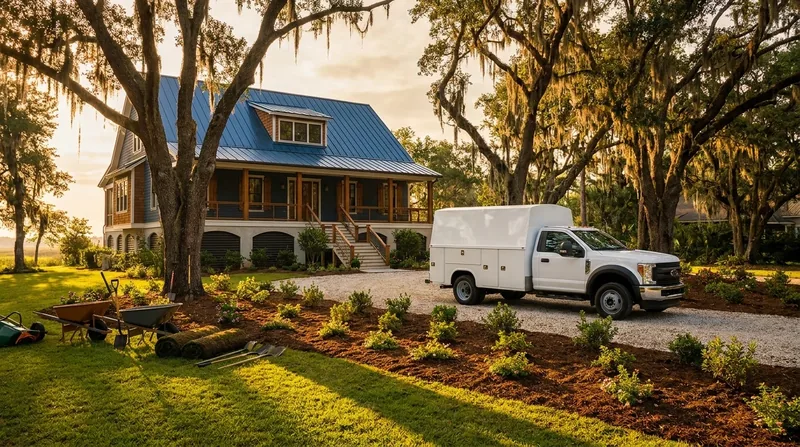
How to Start a Pest Control Business in Louisiana
How to Start a Pest Control Business in Louisiana
Starting a pest control business in Louisiana requires more than a truck, spray equipment, and knowledge of pest behavior. The state regulates structural pest control operators through the Louisiana Department of Agriculture and Forestry (LDAF) Structural Pest Control Commission, with specific licensing pathways for general operators and specialized termite specialists. This guide walks you through the exact steps, timelines, costs, and requirements to launch your Louisiana pest control operation legally and profitably.
Step 1: Choose Your Business Structure
Before you apply for pest control licensing, establish your business legally in Louisiana. You have three main options: sole proprietorship, limited liability company (LLC), or corporation. For most pest control operators, an LLC offers the best balance of liability protection and simplicity.
An LLC in Louisiana costs $100 in filing fees through the Secretary of State's geauxBIZ portal (https://geauxbiz.sos.la.gov/). You'll submit Articles of Organization (Form #365) and name your business something like "Gulf Coast Pest Solutions, L.L.C." Louisiana requires that the LLC name include "L.L.C.," "L.C.," or "Limited Liability Company." The name must be distinguishable from existing registered businesses and cannot imply you are a government agency. Processing typically takes 1 to 3 business days; you can pay $30 extra for expedited processing within 24 hours.
Every business registered with Louisiana's Secretary of State must appoint a registered agent with a Louisiana street address (no PO boxes). This agent can be you, an owner, an employee, or a commercial registered agent service. The agent receives legal documents served on your business. If you choose a registered agent service, expect to pay $100 to $300 per year.
Sole proprietorship vs. LLC: A sole proprietorship requires no formal filing and no LLC fee, but it offers no liability shield if a customer sues. A pest control business carries risk (accidental overspray damage, pesticide exposure claims), so an LLC is strongly recommended. Once formed, your LLC must file an annual report ($30 fee) each year on or before the anniversary of formation.
Step 2: Understand Louisiana's Pest Control Licensing Tiers
Louisiana's Structural Pest Control Commission oversees licensing through the LDAF. The path depends on your role: you can operate as a technician, a senior technician, a registered technician, or an operator.
Registered Technician: A technician under the supervision of a licensed operator. Requires a high school diploma or GED and passing the pest control exam. Many operators start here to learn the business before getting their operator license.
Operator License: The full license to run a pest control business. Louisiana requires one of the following:
- 4 years of experience as a registered technician in Louisiana, plus passing the pest control operator exam, or
- A degree in entomology, pest management, or a related field, plus 1 year of field experience as a registered technician, or
- Equivalent verifiable experience in pest control from another state, evaluated by the Commission
Termite License: Termite treatment and inspections require a separate license category, even if you hold a general operator license. Louisiana's termite market includes both native termite species and the invasive Formosan termite; verify current species prevalence with LDAF before specializing. Termite licensing has the same experience requirements as the general operator license but may include additional testing or continuing education on termite biology and treatment protocols.
Step 3: Become a Registered Technician (Pathway to Operator)
If you lack 4 years of prior experience, start by getting registered as a technician. Contact the LDAF Structural Pest Control Commission to request the exam application and study materials. You'll need to:
- Submit an application to the LDAF Structural Pest Control Commission (part of the Louisiana Department of Agriculture and Forestry, https://agriculture.louisiana.gov/). Include proof of a high school diploma or GED.
- Study pest control fundamentals: Entomology basics, pesticide chemistry, application equipment, safety regulations, and Louisiana-specific pests (fire ants, cockroaches, mosquitoes, termites, rodents).
- Pass the exam: The written exam covers pest biology, pesticide labels and safety, equipment use, and state regulations. Topics include the Federal Insecticide, Fungicide, and Rodenticide Act (FIFRA), EPA requirements, and Louisiana Administrative Code Title 7.
- Register with the Commission: Once you pass, register as a technician. You must work under a licensed operator and cannot operate your own business yet.
- Document your 4 years: Work as a registered technician and keep detailed records of hours, pesticides used, treatments performed, and customer sites. You will need to prove this experience when applying for your operator license.
The exam fee and registration cost roughly $150 to $300, depending on the Commission's current schedule. Exam pass rates in Louisiana are typically 60 to 70 percent on the first attempt, so budget time for study and possible retaking.
Step 4: Apply for Your Pest Control Operator License
After 4 years as a registered technician (or sooner if you hold a relevant degree), apply for your pest control operator license. You will:
- Gather documentation: A resume or affidavit listing your 4 years of experience, letters from former employers confirming your technician work, your high school diploma or GED, and proof of passing the technician exam.
- Submit the operator application to the LDAF Structural Pest Control Commission. Include your LLC or business license documentation.
- Pass the operator exam: This is a more advanced test covering operator responsibilities, pesticide mixing and application techniques, customer communication, record-keeping requirements, and state regulations specific to licensed operators. You must score at least 70 percent (typical passing threshold).
- Receive your operator license: Once approved, the Commission issues your license. Licenses are typically valid for 1 to 3 years and require renewal, continuing education, and renewal fees ($200 to $400, depending on license type and year).
Timeline: Expect 2 to 4 weeks for the Commission to process your operator application and schedule your exam. The exam itself is usually offered within 2 to 3 weeks of your submission. Assuming you pass on your first attempt, you could have an operator license in hand within 4 to 6 weeks of applying.
Step 5: Obtain Local Occupational Licenses and Permits
Louisiana does not issue a single statewide business license for general operations. However, most parishes and municipalities require an occupational license or business operating permit to conduct business locally. Requirements vary by parish and city.
Parish occupational licenses: Contact the parish Clerk of Court or the parish government website for your operating area. Fees typically range from $50 to $200 annually, depending on the parish.
Municipal permits: If you operate in a city (New Orleans, Baton Rouge, Lafayette, Lake Charles, etc.), you may need a city business license as well. New Orleans, for example, charges $20 to $100 depending on business size.
Trade name registration (if applicable): If you are using a business name other than your LLC's legal name, file a Trade Name Registration (Form #309) with the Louisiana Secretary of State for $75. This is optional if your LLC name is the name you advertise.
Visit the geauxBIZ portal (https://geauxbiz.sos.la.gov/) after registering your business to generate a preliminary checklist of other licenses and permits your pest control business may need based on your specific operations and location.
Step 6: Register for State and Federal Taxes
Federal Employer Identification Number (EIN): Apply for an EIN from the IRS (free, at irs.gov). You need this to hire employees and open a business bank account. You can apply online and receive your EIN immediately.
Louisiana sales tax permit: If you charge for services (not products), you typically do not collect sales tax. However, if you sell pesticides, traps, or equipment to customers, you must register for a sales tax permit with the Louisiana Department of Revenue (https://revenue.louisiana.gov/businesses/general-resources/business-registration/). Louisiana's state sales tax rate is 5 percent; many parishes add local sales tax (1 to 2 percent more). Registration is free; you file sales tax returns monthly or quarterly depending on your volume.
Louisiana income tax: As an LLC taxed as a sole proprietorship, your business income passes through to your personal tax return at Louisiana's flat 3 percent individual income tax rate (for taxable periods beginning on or after January 1, 2025). If your LLC is taxed as a corporation, the corporation pays a flat 5.5 percent corporate income tax.
Step 7: Gather Equipment and Materials
Your pest control toolkit includes both EPA-approved pesticides and application equipment. You must use only registered pesticides and follow every label instruction exactly. Using a pesticide in a manner inconsistent with its label is a federal violation under FIFRA.
Essential equipment:
- Handheld or backpack sprayer (1 to 5 gallons capacity, $30 to $150)
- Pressurized spray rod or wand for application ($20 to $80)
- Protective gear: respirator (NIOSH-approved, $50 to $200), chemical-resistant gloves, coveralls, safety glasses, boots ($100 to $300 total)
- Traps and monitors (roach traps, rodent traps, termite monitors, $50 to $200 initial stock)
- Inspection equipment: flashlight, probe, moisture meter ($50 to $150)
- Vehicle: truck or van with shelving and secure chemical storage ($5,000 to $20,000 used, or lease)
Pesticides and products: Stock EPA-registered insecticides, fungicides, and rodenticides. Common Louisiana products include:
- Pyrethroid insecticides (for general pests, termites: $30 to $60 per quart)
- Neonicotinoid products (for fire ants, fleas: $40 to $100 per application unit)
- Boric acid or gel baits (for cockroaches, $20 to $50)
- Termiticide (for termite pre-treatments and active infestations: $100 to $400 per gallon, highly specialized)
- Rodent baits and tracking powder ($15 to $40 per unit)
Purchase chemicals from licensed distributors only. Never buy pesticides from unlicensed sources. Your LDAF operator license entitles you to bulk purchasing discounts from supply companies.
Estimated startup inventory cost: $500 to $2,000 for a beginner operator. Replenish supplies as you complete jobs; most operators spend $100 to $300 monthly on chemicals and supplies once established.
Step 8: Secure Insurance and Bonding
Pest control businesses carry liability risk: accidental overspray, customer allergic reactions, property damage, or pesticide misapplication. Insurance is critical.
General liability insurance: Covers property damage and bodily injury. Expect $600 to $1,500 annually for a one-person operation. Quotes vary by equipment, coverage limits, and claims history.
Workers' compensation (if you hire employees): Louisiana requires this by law if you have employees. Cost is typically $15 to $25 per $100 of employee payroll.
Commercial auto insurance: Required if you use a vehicle for business. Pest control vehicles typically fall into commercial use categories; expect $1,200 to $2,000 annually.
Bonding: Some customers or municipalities may require a surety bond ($500 to $1,000 one-time). Verify with your LDAF license renewal or local permits.
Estimated insurance startup cost: $2,500 to $4,500 annually for a small operator.
Step 9: Develop Pricing and Marketing
Research your market. Louisiana pest control prices vary by region and pest type:
- General pest control service (monthly): $40 to $80 per visit for a single-family home
- Termite inspection: $50 to $150 per inspection
- Termite treatment (active infestation): $400 to $2,000 or more depending on extent
- Termite prevention (annual): $150 to $400
- Rodent control: $100 to $300 per treatment cycle
- Fire ant treatment: $50 to $150 per yard
Start conservatively: Offer competitive introductory pricing ($35 to $50 per service) to build a customer base and reviews. Increase prices after 6 to 12 months as you build a reputation. Louisiana customers respond well to local, trusted operators; focus on word-of-mouth and Google reviews before spending heavily on ads.
Step 10: Complete Continuing Education and Renew Your License
Your LDAF pest control operator license requires renewal every 1 to 3 years (verify the current renewal period with LDAF). Renewal requires:
- Renewal fee ($200 to $400)
- Continuing education (typically 4 to 8 hours annually), covering new pesticides, application techniques, regulatory changes, and safety
- Proof of compliance with state regulations (no violations during the licensing period)
Many pest control suppliers and the Louisiana SBDC offer continuing education courses either in-person or online. Plan to spend $50 to $150 on courses annually.
Tips and Common Mistakes to Avoid
Mistake 1: Ignoring pesticide labels. Every product is registered for specific uses and sites. Do not apply a product to a surface, plant, or animal not listed on the label. Illegal off-label use can result in fines, license revocation, and customer injury claims.
Mistake 2: Skipping the technician apprenticeship. Jumping directly to an operator license without field experience leads to costly errors. Work as a registered technician first; the 4 years teaches you pest biology, equipment, customer service, and regulatory compliance that textbooks cannot.
Mistake 3: Underpricing services. Louisiana pest control is competitive, but underpricing erodes your margin and signals low quality. Price based on your costs, time, expertise, and insurance, not competitor prices. Loyal customers pay fair rates for reliable service.
Mistake 4: Neglecting continuing education. Pest control evolves: new pesticides, resistant pest populations, changing regulations. Operators who skip CE fall behind and risk losing their license.
Mistake 5: Operating without proper insurance. A single liability claim can bankrupt an uninsured operator. Invest in insurance from day one.
Mistake 6: Overlooking local permit requirements. Each parish and city adds its own rules. Missing a local permit can result in fines or a shutdown order. Verify your entire compliance checklist with the LDAF and your parish Clerk of Court.
Expected Results and Timeline
If you follow this pathway, here is a realistic timeline:
Months 1 to 2: Form your LLC ($100 fee, 1 to 3 days processing), apply for an EIN (free, same day), register for sales tax and local permits ($0 to $300 depending on parish).
Months 3 to 6: Pass the pest control technician exam, register as a technician, and begin working under a licensed operator. Total cost: $150 to $300 in exam fees.
Months 7 to 48: Work as a registered technician for 4 years, accumulating field experience, learning pest identification, mastering application techniques, and building a reputation.
Month 48 to 50: Apply for your operator license, pass the operator exam, and receive your license. Total cost: $300 to $600 in application and exam fees.
Month 50 onward: Operate your own pest control business, hire and supervise technicians (if desired), build your customer base, and manage your operations.
Total startup costs (to operator status): $3,000 to $7,500, including LLC formation, licensing, equipment, initial inventory, insurance, and local permits. Add $500 to $1,000 if you pursue termite specialization.
Note: This article is informational and does not constitute legal or tax advice. Requirements may change, and specific situations vary. Consult a Louisiana-licensed attorney for legal questions, a CPA for tax planning, and the LDAF Structural Pest Control Commission directly for current licensing procedures, exam dates, and fees. Visit the Louisiana Department of Agriculture and Forestry at https://agriculture.louisiana.gov/ for official guidance.
Getting Help
Louisiana Small Business Development Center (Louisiana SBDC) at https://louisianasbdc.org/ offers free business planning, licensing guidance, and mentoring. The U.S. Small Business Administration (SBA) District Office for Louisiana at https://www.sba.gov/district/louisiana provides startup resources, loans, and training. Both can accelerate your path to opening a profitable pest control business in Louisiana.
Keep exploring: related Louisiana guides
- How to Start a Mold Remediation Business in Louisiana
- How to Start a Junk Removal Business in Louisiana
- How to Start a Lawn Care Business in Louisiana
- How to Start a Landscaping Business in Louisiana
- How to Get a Contractor License in Louisiana (LSLBC)
- How to Start an LLC in Louisiana
- Louisiana Business License
- How Much Does It Cost to Start a Business in Louisiana
- All Louisiana business types
- Every Louisiana guide in one place