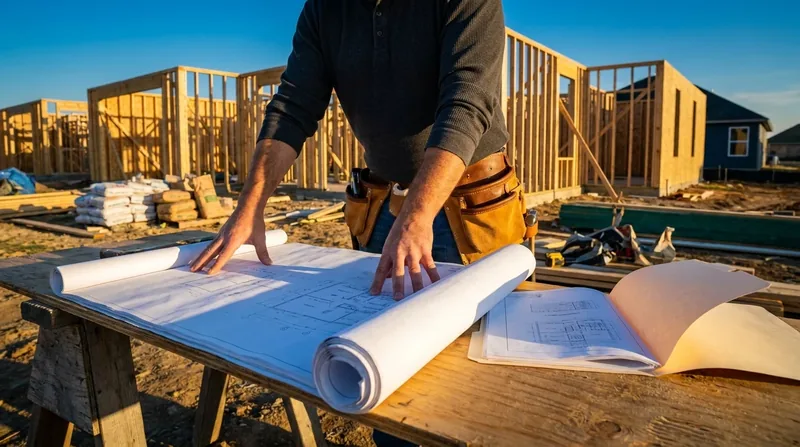
How to Get a Contractor License in Louisiana (LSLBC)
How to Get a Contractor License in Louisiana (LSLBC)
Whether you're planning to bid on residential construction, commercial projects, or specialized trades, a Louisiana State Licensing Board for Contractors (LSLBC) license is your entry point to legitimate contracting work in the state. This guide walks you through the exact steps, thresholds, and requirements to get licensed, plus what to expect during the application and exam process.
What Is the LSLBC and Why You Need This License
The Louisiana State Licensing Board for Contractors oversees licensing for anyone performing construction work above specific dollar thresholds. The board ensures contractors meet education, experience, and ethical standards before taking on client projects. If you perform construction work without the proper Louisiana contractor license when required, you can face fines and legal liability. Many clients, lenders, and property owners require proof of licensure before signing contracts.
This article is informational in nature and does not constitute legal or tax advice. Consult a Louisiana-licensed attorney or the LSLBC directly for questions specific to your situation.
Understanding License Types and Work Thresholds
The Louisiana contractor license framework is organized by work type and project value. Your threshold determines whether you need licensing at all:
Residential Construction License
A residential construction license is required for residential construction work valued at $50,000 or more. This threshold was lowered from $75,000 on August 1, 2024, per Act 178 of 2024. If you see older materials citing $75,000, note that the current requirement is $50,000. This license covers work like foundation installation, framing, roofing, and other structural residential projects at or above that amount.
Commercial Contractor License
A commercial contractor license covers non-residential construction work valued at $50,000 or more, including commercial buildings, industrial facilities, and mixed-use projects at that threshold.
Residential Roofing License
Residential roofing work valued at $7,500 or more requires a Residential Roofing license or a Residential Construction license (the construction license covers roofing). This requirement took effect on January 1, 2026. If a roofing project is under $7,500, licensing is not required.
Home Improvement Registration
If you perform residential work valued from $7,500 up to under $50,000, you may register as a home improvement contractor. Home improvement work excludes structural and roofing work; those require the full Residential Construction license regardless of dollar value. Home improvement projects include kitchen remodels, bathroom updates, deck additions, and similar non-structural residential work within the value range.
Electrical, Mechanical, and Plumbing (EMP) Licenses
Electrical, mechanical, and plumbing work valued at $10,000 or more requires licensing in the respective trade.
Hazardous Materials License
Work involving hazardous materials requires licensing at any dollar value ($1 or more).
The key takeaway: know your work type and project value before starting any project. If your work falls below the threshold, licensing is not required, but if it exceeds the threshold, you must obtain the proper Louisiana contractor license.
Prerequisites and Eligibility Requirements
Before you apply for a Louisiana contractor license, you must meet baseline eligibility criteria. These include:
- Age: You must be at least 18 years old.
- Legal residency or business presence: You must be a Louisiana resident or have a legitimate business address in Louisiana. Out-of-state businesses can apply if they maintain a registered Louisiana office.
- Experience: You must have documented work experience in your trade. Experience requirements vary by license type; most require between two and five years of verifiable hands-on experience, either as an employee or business owner.
- Financial responsibility: Contractors must demonstrate financial responsibility. The LSLBC may review credit history and references.
- No disqualifying convictions: Felony convictions and certain misdemeanors can disqualify you. Check the LSLBC rules for the full list.
- Exam readiness: You must be prepared to pass the Louisiana Business and Law exam, which tests knowledge of contractor laws, ethics, and business practices.
If you have questions about your specific eligibility, contact the Louisiana State Licensing Board for Contractors or consult an attorney familiar with Louisiana contractor licensing.
Step-by-Step Application Process
Step 1: Gather Required Documentation
Before submitting your application, collect the following documents:
- Proof of experience (letters from employers, paycheck stubs, invoices, or customer references documenting your work history)
- Photo identification (driver's license or passport)
- Proof of Louisiana residency or business registration (lease agreement, property deed, or business license)
- Social Security Number and Tax ID
- Completion certificates from any approved trade schools or apprenticeships (if applicable)
- Proof of any continuing education hours completed
- Criminal history disclosure form (if applicable)
Have originals or certified copies available; the LSLBC will not accept photocopies for certain documents.
Step 2: Complete Your Application Form
The LSLBC provides a standard application form for your license type. You can obtain the application from the Louisiana State Licensing Board for Contractors office or website. Fill out all sections accurately, including your personal information, work experience, and license type requested. Incomplete applications are rejected and must be resubmitted, which delays the process.
Step 3: Submit Your Application and Fee
Submit your completed application along with the application fee to the LSLBC office. The exact fee varies by license type and application type (new license, renewal, or reinstatement); confirm the current fee with the board office. Payment options typically include check, money order, or credit card. Submit applications in person at the LSLBC office or by mail to the address on the application form.
Keep your receipt and any confirmation number provided. The LSLBC will contact you if any documentation is missing or if they need clarification on your experience.
Step 4: Request Your Exam Authorization and Schedule
Once the LSLBC approves your application for completeness, they issue an exam authorization. This authorizes you to sit for the Louisiana Business and Law exam. Use this authorization to schedule your exam through the approved testing center. Exam scheduling is typically done online or by telephone.
Step 5: Pass the Louisiana Business and Law Exam
The Louisiana Business and Law exam tests your knowledge of contractor regulations, business law, ethics, and safety practices. This is a requirement for all Louisiana contractor license types. See the next section for exam details.
Step 6: Receive Your License
Once you pass the exam, the LSLBC issues your license. You can perform work under your Louisiana contractor license immediately. The license is typically valid for a set renewal period; confirm the term with the LSLBC when you receive it.
Use your license number on invoices, contracts, and marketing materials. You can also look up your license on the LSLBC website to verify it is active and in good standing.
The Louisiana Business and Law Exam
Exam Content and Coverage
The Louisiana Business and Law exam covers Louisiana contractor regulations, including:
- Contractor licensing laws and board rules
- Work thresholds and license types (residential, commercial, roofing, home improvement, EMP, etc.)
- Code of ethics and professional conduct
- Insurance and bonding requirements
- Contract requirements and bid specifications
- Safety regulations and standards
- Worker compensation and employment laws
- Mechanics lien laws
- General business and tax obligations
Exam Format and Passing Score
The exam is typically a multiple-choice test administered by an approved testing center. The exact number of questions, time limit, and passing score should be confirmed with the LSLBC and your testing center, as these details can change. Most state contractor exams require a score of 70 to 80 percent to pass.
How to Prepare
The LSLBC publishes study materials and reference guides to help you prepare. Review the contractor laws (Louisiana Revised Statutes Title 37, Section 2100 et seq.), LSLBC rules, and board bulletins. Many candidates also use third-party study guides and practice exams designed for Louisiana contractor licensing. Set aside time to study over several weeks; cramming the night before often results in failure. Consider joining a study group or hiring a tutor if you struggle with test-taking.
On exam day, arrive early, bring your authorization letter and photo ID, and read each question carefully. Do not rush; you have time to think through your answers.
Tips to Avoid Common Mistakes
Mistake 1: Incomplete or inaccurate experience documentation. The most common reason applications are denied is insufficient or poorly documented work experience. Gather letters from employers and customers that clearly state the dates, scope of work, and your role. Vague statements like "general construction" without specific examples often are not accepted.
Mistake 2: Confusing work thresholds. Understand the threshold for your specific work type. For example, residential roofing work of $6,000 does not require a license (under the $7,500 threshold), but $8,000 of roofing does. Similarly, home improvement work does not include structural or roofing work; if your project involves those, you need the full Residential Construction license regardless of dollar value.
Mistake 3: Not studying the Louisiana Business and Law exam. The exam is not trivial, and generic contractor knowledge will not guarantee a pass. Study Louisiana's specific laws and LSLBC rules. Failing the exam delays your license and requires paying a retest fee.
Mistake 4: Missing deadlines or submission errors. Double-check that all required fields on your application are complete and that your documents are clear and legible. Submit applications well before any business launch date, as processing can take several weeks.
Mistake 5: Assuming old information still applies. Thresholds and regulations change. The residential contractor threshold was lowered to $50,000 in 2024, and roofing requirements changed on January 1, 2026. Always verify current requirements with the LSLBC, not older websites or articles.
After You Obtain Your Louisiana Contractor License
Renewal and Continuing Education
Your Louisiana contractor license must be renewed on a periodic schedule (typically every one to three years, depending on license type). Renewal typically requires a fee and proof of any continuing education hours completed during the term. Mark your renewal date on your calendar and renew before expiration to avoid a lapsed license.
License Lookup and Verification
You and your clients can verify your Louisiana contractor license status using the LSLBC license lookup tool. This public database allows anyone to confirm that your license is current and in good standing. Provide this lookup access to clients for transparency and to build trust.
Insurance and Bonding
Many license types require you to maintain liability insurance and sometimes a contractor bond. These protect your customers and yourself. Verify insurance and bonding requirements with the LSLBC for your specific license type, and maintain continuous coverage throughout the term of your license.
Compliance and Record Keeping
Keep records of all contracts, work performed, invoices, and customer communications. The LSLBC can audit licensed contractors at any time. Maintain contracts in writing, specify project scope and costs clearly, and document all work completed. Failure to comply with board rules can result in fines, license suspension, or revocation.
Bottom Line
Getting a Louisiana contractor license is a structured process that begins with confirming your work falls above the required threshold, gathering your experience documentation, completing the application, passing the Louisiana Business and Law exam, and receiving your license. The process typically takes four to eight weeks from submission to licensure. Once licensed, understand your obligations to maintain compliance, renew on time, and operate according to Louisiana contractor regulations.
If you are unsure whether your specific work requires licensing or have questions about thresholds, contact the Louisiana State Licensing Board for Contractors directly. If you need guidance on the legal implications of contracting or licensing, consult a Louisiana-licensed attorney or a CPA familiar with contractor tax obligations.
For more information, visit the Louisiana State Licensing Board for Contractors office, contact them by phone, or review their website for forms, current fees, exam schedules, and regulatory updates.
Keep exploring: related Louisiana guides
- Louisiana Bar Card
- How to Get a Resale Certificate in Louisiana
- Louisiana Home Improvement Registration
- How to Get an EIN in Louisiana
- How to Start a General Contractor Business in Louisiana
- How to Start an Electrical Contracting Business in Louisiana
- How to Start a Plumbing Business in Louisiana
- How to Start an HVAC Business in Louisiana
- Every Louisiana guide in one place