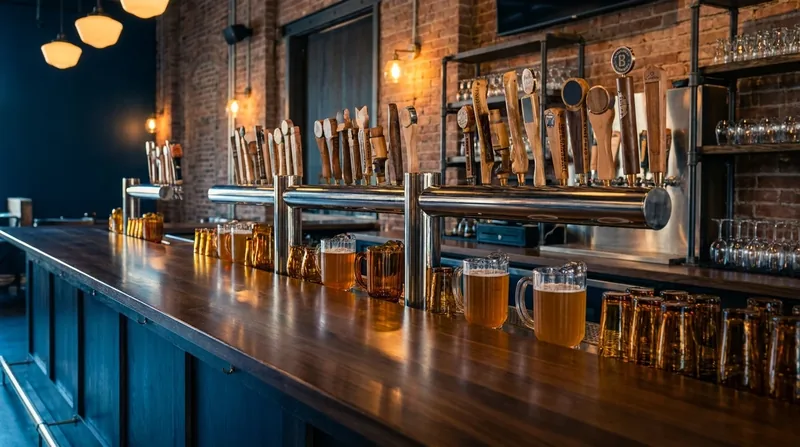
How to Get a Liquor License and Open a Bar in Louisiana
How to Get a Liquor License and Open a Bar in Louisiana
Opening a bar in Louisiana requires navigating a dual licensing system that combines state and local permits. Unlike some states with a single alcohol license, Louisiana operates under the Alcoholic Beverage Control framework where the Alcohol and Tobacco Control (ATC) board issues state permits, and each parish and municipality layers on its own requirements. This guide walks through exactly what you need to know, what it costs, and how long the process takes.
Understanding Louisiana's Dual Permit System
The first thing to understand is that you will need two separate licenses to legally operate a bar in Louisiana. The Alcohol and Tobacco Control issues the state-level Louisiana liquor license, but that is not enough. Your local parish or municipality also issues an occupational license or permit specifically for alcohol service. Both must be in place before you open.
The ATC permit is issued by the state and covers your operation under Louisiana law. The local permit, filed with your parish clerk of court or municipal government, covers local zoning, community standards, and local tax requirements. Each has different fees and timelines. This parallel process is what trips up many new bar owners who assume the state license is all they need.
Prerequisites and Materials You Will Need
Before you apply for either permit, gather these items:
- Business formation documents: If you plan to operate as an LLC or corporation, file your Articles of Organization or Incorporation with the Louisiana Secretary of State first. A sole proprietorship is allowed but offers no liability protection.
- Proof of identity: Government-issued ID for all owners and the designated manager (ATC calls this the licensee or permit holder).
- Physical address: A confirmed street address where the bar will operate. Post office boxes do not qualify. You must own or have a signed lease on the property.
- Proof of ownership or lease: Either a deed or a signed lease agreement showing your right to occupy the premises for at least the term of the license (typically one year).
- Local approval: Some parishes require zoning clearance or a letter from your landlord or neighborhood association indicating no objection. Requirements vary by parish, so confirm with your local clerk of court.
- Responsible Vendor certification: At least one person (often the owner or designated manager) must complete a Responsible Vendor training course and hold current certification before the ATC will issue a permit. This is not optional. The training covers age verification, intoxication recognition, and over-service liability.
- Fingerprints for background check: All owners must submit to a state and federal background check. Criminal convictions related to alcohol, violence, or fraud can result in denial.
Do not assume your lease will qualify or that your address meets local zoning rules. Confirm these details with your parish clerk of court and municipal government before investing significant time or money.
Step-by-Step Process for Getting a Louisiana Liquor License
Step 1: Secure Responsible Vendor Certification
Start here, before you file any applications. The ATC will not issue a license without proof that at least one person on the permit holds current Responsible Vendor certification. You can take the training online through approved vendors or in person at some locations. The course typically takes 2 to 3 hours and costs between $15 and $50. Once you complete it, you receive a certificate valid for several years. Keep it on file; the ATC will ask for proof during your application review.
Step 2: Verify Local Zoning and Occupancy Rules
Contact your parish clerk of court and your municipal government (city or town where the bar will operate). Ask three specific questions: (1) Does the address allow alcohol service under local zoning? (2) What is the current distance to schools, parks, or other bars? (3) Are there any local waiting periods or additional local permits required before you apply to the state? Some parishes have distance rules (e.g., not within 600 feet of a school) that will automatically disqualify certain locations. Do not proceed to step 3 until you have written confirmation that your address qualifies.
Step 3: Decide on Your ATC Permit Class
The ATC issues several permit classes, but the most common for a bar is Class A-General, which allows the sale of beer, wine, and spirits for on-premises consumption. The Louisiana liquor license cost for Class A-General is $200 per year in cities and $100 per year in towns (the distinction is set by Louisiana law based on population size). Confirm which applies to your municipality. Other permit classes exist for breweries, distilleries, and beer only, but a full-service bar is almost always Class A-General.
Step 4: Complete the ATC Application
Request the current ATC application form from the Alcohol and Tobacco Control division of the Louisiana Department of Revenue. The form asks for your business name, address, ownership structure, the manager's name (who will be the day-to-day licensee), and proof of Responsible Vendor certification. You will also need to disclose ownership percentages for all partners and answer background questions. If you or any owner has a criminal history, disclose it accurately; hiding convictions is grounds for denial and prosecution.
Step 5: File Locally Before (or Simultaneously With) the State
While the exact order varies by parish, most parishes require you to file a local occupational license or trade permit before or at the same time as the state application. Visit your parish clerk of court office and ask for the Louisiana alcohol permit or occupational license application. You will need proof of identity, proof of business address, and sometimes a local background check authorization. Local permit fees vary by parish but typically range from $50 to $300 annually. Ask your parish clerk if there are any local waiting periods; some parishes impose a 30 to 60-day review window before your state application can be considered.
Step 6: Submit the ATC Application
Mail or hand-deliver your complete ATC application (along with copies of your Responsible Vendor certificate, local permit approval or confirmation, and any supporting documents) to the Alcohol and Tobacco Control office. The address and current application forms are available from the Louisiana Department of Revenue website at revenue.louisiana.gov. Include a check for the applicable permit fee ($200 or $100, depending on your municipality classification).
Step 7: Respond to Any ATC Requests for Additional Information
The ATC may request additional documentation, such as proof of local approval, clarification on ownership, or updated background check results. Respond promptly to any such requests. Delays in your response can extend the timeline significantly.
Step 8: Wait for Approval and Receive Your Permit
The ATC does not publish standard processing times. Most applications are approved within 4 to 6 weeks; others take longer if background checks require additional investigation or if local permits are delayed. Once approved, the ATC will issue your permit, typically by mail. Do not open your bar until you have both the state ATC permit and the local permit in hand.
Understanding Permit Costs
Licensing costs are straightforward but are only one part of the total cost to open a bar:
- Responsible Vendor training: $15 to $50 (one-time, valid for multiple years).
- ATC state liquor license: $200 per year (in cities) or $100 per year (in towns).
- Local occupational permit: $50 to $300 per year (varies by parish and municipality; confirm with your clerk of court).
- Initial inventory: This is not a license fee but the cost to stock your bar with spirits, beer, wine, and mixers. Budget $3,000 to $10,000 depending on your selection and bar size.
- Lease deposit and buildout: Your actual space may require renovations to meet health code and ATC requirements (proper storage, age verification tools, etc.).
Do not overlook local costs. Some municipalities charge additional licensing fees, business privilege taxes, or occupational license taxes that are separate from the ATC permit and the local alcohol license.
Video Poker Licensing (Optional)
If you want to operate video poker machines in your Class A-General bar, you must apply separately to the Louisiana Gaming Control Board for gaming device eligibility. Video poker is not automatic; it requires a separate application and approval. The Gaming Control Board will review your bar's location, your operating history (if applicable), and local approval. Video poker fees vary and change periodically, so contact the Gaming Control Board directly for current cost and eligibility requirements. This step is optional; many bars operate profitably without video poker devices.
Tips and Common Mistakes to Avoid
- Do not assume zoning compliance: Many new bar owners find out too late that their address violates local distance rules or zoning codes. Confirm this in writing with your parish clerk before investing in a lease.
- Verify local versus state requirements: Each parish has different local rules. Do not assume that what worked in one parish will work in another. Always contact your specific parish clerk of court.
- Get Responsible Vendor certified before applying: You cannot complete the ATC application without proof of current certification. Do not wait until after you submit your application to take the training.
- Be transparent about criminal history: If you or any owner has a conviction, disclose it fully and accurately on the application. The ATC will discover it during the background check anyway, and dishonesty is grounds for immediate denial.
- Keep your local permit current: Some bar owners focus on the state ATC permit and forget to renew their local permit. If your local permit lapses, your ability to operate is suspended even if your state permit is current.
- Budget for health code compliance: Your bar must meet Louisiana health code requirements for food safety (if you serve food), sanitation, and storage. These requirements may require physical improvements to your space and must be certified before you open.
- Understand the timeline: Plan for 2 to 4 months from start to finish, depending on your parish and the completeness of your application. Do not commit to an opening date until you have both permits in hand.
Expected Results and Timeline
If you have your address confirmed, have completed Responsible Vendor training, and have a clean background check, you can realistically expect to hold both permits (state and local) within 8 to 12 weeks. If your local parish has a waiting period, or if the ATC requests additional information, this can extend to 12 to 16 weeks. The single largest variable is how quickly your local parish processes its occupational license; some move in 2 weeks, others in 6 weeks or more.
Once you receive your permits, you may open immediately, provided you have also met all health code inspections and have your initial inventory in place. Many bar owners find that the licensing process is faster than the actual buildout and stocking of the space.
Where to Get Help and Verify Requirements
For state-level requirements, contact the Louisiana Department of Revenue, Alcohol and Tobacco Control division, at revenue.louisiana.gov. For local requirements, contact your parish clerk of court; you can find contact information through your parish government website. The Small Business Administration also offers free resources at sba.gov/district/louisiana, including connections to the Louisiana Small Business Development Center.
Disclaimer
This article is informational only and does not constitute legal or tax advice. The requirements and fees outlined here are accurate as of the publication date, but state and local rules, fees, and processes change periodically. Before applying, confirm all requirements, fees, and deadlines with the Louisiana Department of Revenue and your specific parish clerk of court. If you have questions about the legal structure of your business, employment law, or tax obligations, consult a Louisiana-licensed attorney or certified public accountant.
Keep exploring: related Louisiana guides
- How to Start a Bakery Business in Louisiana
- How to Start a Brewery or Distillery in Louisiana
- How to Start a Sno-Ball Stand in Louisiana
- How to Start a Catering Business in Louisiana
- How to Start an LLC in Louisiana
- Louisiana Business License
- How Much Does It Cost to Start a Business in Louisiana
- All Louisiana business types
- Every Louisiana guide in one place